Previous
Next


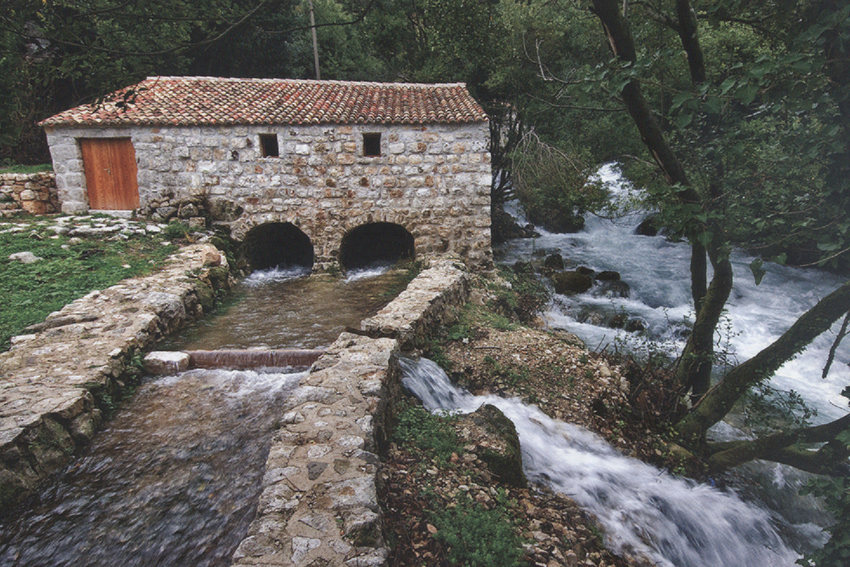


MAXIMUM USABILITY OF WATER POTENTIAL
Originally the mills were made so that water ran from the river through sluices and a mill, falling back into the river. The next mill on the river would then take the water on its own and the procedure was repeated. As a result, a considerable amount of water energy remained unused, as the difference in river level was not being optimally used.
Having noticed this problem, the authorities of Dubrovnik, after nearly four centuries, built a new system which powered the mills by water cascading before returning to the river. They even obtained nine levels for water to cascade before reaching the mills, although no more than eight levels were used in practice.
A good example of the maximum usability of this system is Magud’s Mill. This mill could not be used for grinding at the time of great floods of the Konavle Field due to its low elevation, being a meter or two below the level of the river. The problem was solved by building a wall and digging a canal of over one hundred meters in length in order to align the stream with the river level. There was even a saying: "The Magud's Mill sunk".
Three mills were not incorporeted into the new system. That is why in dry summer seasons only one could work given the lack of water to operate them all. That one, catching water from the river, was the last one in line and did not affect the work of other mills.